
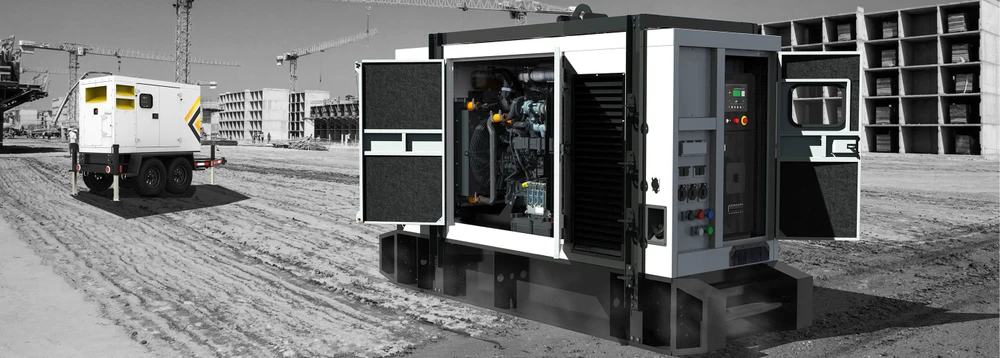
Yes, data centers widely use diesel generators as their main source of backup and emergency power. When the utility grid goes down, these generators keep servers, cooling systems and network gear running without a break. Even a few seconds of downtime can cost an operator revenue, data and customer trust, so backup power is never an afterthought.
At General Power, we supply diesel generators for mission-critical facilities, and our engineers and technicians are EGSA certified. We have seen firsthand how the right system protects uptime when the grid fails. Below, our team explains why operators choose diesel, how they use their generators day to day and where diesel backup power is headed.
Key Takeaways
- Data centers rely on diesel generators as their main source of backup power when the utility grid fails.
- Diesel generators can take on full load within about 10 seconds, with UPS batteries bridging the gap.
- On-site fuel tanks let many hyperscale facilities run for up to 96 hours without outside deliveries.
- Most generators sit on standby and run only for emergencies and about 100 hours of yearly testing.
- Tier 4 Final technology and renewable diesel help reduce emissions from data center generators.
- General Power’s EGSA certified team helps data centers size, install and maintain reliable backup power systems.
Why Data Centers Choose Diesel Generators for Backup Power
Uptime is the top priority for every data center. Diesel generators deliver on that goal better than any other backup option on the market today, which is why they appear on nearly every major campus. Diesel stands out for four reasons: speed, fuel security, power output and a long track record. The table below shows how diesel compares with other common backup sources.
|
Backup Option |
Startup Time |
On-Site Fuel |
Typical Runtime |
Upfront Cost per MW |
|
Diesel generator |
About 10 seconds |
Yes, stored in tanks |
24 to 96+ hours |
Lower |
|
Natural gas generator |
Often slower to accept full load |
No, relies on a pipeline |
Depends on pipeline supply |
Higher |
|
Battery storage |
Instant |
Stored charge only |
Minutes to a few hours |
Higher for long runtimes |
Fast Startup and Load Acceptance
Diesel generators can start and take on full electrical load within about 10 seconds of a grid failure. That speed matters because servers, storage arrays and cooling systems cannot wait for power to come back. A slow response can mean crashed workloads, overheated equipment and lost data.
Uninterruptible power supply (UPS) batteries cover the first few seconds, and then the generator picks up the whole facility. The two systems work as a team, with the batteries acting as a bridge and the generator carrying the long haul. The result is near-continuous uptime for servers, cooling and network equipment.
On-Site Fuel Storage and Energy Independence
Diesel can be stored on-site in large tanks, which natural gas cannot offer. Many hyperscale facilities keep enough fuel to run for up to 96 hours with no outside delivery. That gives operators a full four days to restore utility power or arrange more fuel.
This matters because the earthquake, hurricane or ice storm that knocks out the grid can also disrupt gas pipelines. With fuel on-site, operators control their own resilience instead of depending on outside supply lines. In our experience, that sense of control is one of the main reasons owners stick with diesel.
High Power Output at a Lower Capital Cost
A single diesel generator typically delivers between 1 and 4 megawatts. Large campuses house dozens or even hundreds of units working together, and diesel costs less up front per megawatt than other backup methods. That lower cost frees up budget for servers, cooling and other core systems.
Diesel also scales well. Operators can add generators in modules as their IT load grows, so they buy only the capacity they need today and still leave room for tomorrow.
Proven, Mature Technology
Diesel generators have decades of field history in hospitals, telecom sites and data centers. Parts, trained technicians and fuel suppliers are easy to find in nearly every market. When a part needs replacing, it is usually a phone call away rather than a long wait.
Engineers, insurers and standards bodies know diesel well. Designs built around diesel backup fit cleanly into frameworks such as the Uptime Institute tier system, which makes planning and approval smoother.
How Data Centers Use Diesel Generators
Most of the time, data center generators sit on standby. They run only when the facility needs them or when crews test them to confirm they are ready.
Operators put their generators to work in three main ways, covered below.
Emergency Power During Utility Outages
Most air quality permits designate data center generators for emergency use during utility blackouts. That is their core job, and it is exactly what they are built to do. Every design choice, from engine size to fuel storage, supports this one mission.
Picture a storm that cuts utility power. The UPS carries the load for a few seconds, the automatic transfer switch signals the generators and they come online to power the building. Once utility power is stable again, the switch moves the load back to the grid and the generators return to standby, often without customers ever noticing an issue.
Routine Testing and Maintenance
Permits typically allow around 100 hours per year of non-emergency run time. Operators use that time to confirm that every unit will perform when called on. Common practices include:
- Weekly or monthly no-load tests
- Load-bank tests that run units at real power levels
- Fuel quality testing and fuel polishing
- Battery, coolant and filter checks
General Power offers service and maintenance programs that cover each of these tasks. A planned schedule keeps generators ready and helps operators document that they are following their permits.
Supporting the Grid During Peak Demand
Industry reports, including those from the Better Data Center Project and Latitude Media, note growing interest in running data center generators during peak grid stress or demand-response events. On-site generation can take load off a strained grid right when it needs help most.
That support can help prevent wider outages for nearby homes and businesses. Local permits and utility programs govern this use, so operators work with regulators and utilities before they join.
Addressing Environmental Questions About Diesel Generators
As data center capacity grows, so does attention on backup power. Communities and regulators want to understand how these generators affect local air and noise.
The industry has strong answers. The sections below explain how operators and manufacturers are responding.
Putting Run Time in Perspective
Virginia alone has more than 10,500 permitted generator units. That number sounds large, but most units sit idle for the vast majority of the year and run only for short tests. Because they run so rarely, their total yearly emissions stay low.
Extended outages do raise run time. During those events, though, the generators keep critical services such as hospitals, banking and emergency communications online when the community needs them most. In other words, the generators do their heaviest work exactly when people depend on them.
Modern Emissions Control Technology
EPA Tier 4 Final engines and aftertreatment systems sharply cut nitrogen oxides (NOx) and particulate matter. Selective catalytic reduction (SCR) sprays a urea-based fluid into the exhaust, which turns NOx into harmless nitrogen and water. A diesel particulate filter (DPF) traps soot before it leaves the exhaust stack.
Noise gets the same careful attention. Sound-attenuated enclosures lower operating sound levels, which helps data centers stay good neighbors.
Cleaner Fuels and the Path Forward
Some operators, including Microsoft, have pledged to move away from petroleum diesel by 2030. The good news is that many modern diesel generators can run on renewable diesel, also called HVO, with little or no modification. That keeps the generator a long-term investment as fuels change.
Hybrid setups add another option. Pairing diesel generators with battery storage gives operators fast short-term response plus long-duration backup, and the diesel engine remains the backbone of that long-duration protection. This flexible path lets owners meet new goals without giving up reliability.
Choosing the Right Diesel Generator for a Data Center
Not every data center needs the same generator setup. The right choice depends on load, redundancy goals, runtime targets and local rules.
Below, we break down the main selection factors and explain why the supplier you choose matters.
Key Selection Factors
Proper generator sizing starts with the IT load and then adds cooling and support systems. We also build in headroom so the system can grow with the facility instead of being replaced too soon.
|
Factor |
What to Consider |
|
Load sizing |
IT load plus cooling, with headroom for growth |
|
Redundancy |
N+1 or 2N configurations based on uptime goals |
|
Fuel capacity |
Tank size that meets runtime targets, such as 24 to 96 hours |
|
Emissions tier |
EPA tier and local air permit requirements |
|
Paralleling and controls |
Switchgear that lets multiple units share load smoothly |
Redundancy is just as important. An N+1 design adds one spare unit beyond what the load needs, while a 2N design doubles the full system for maximum protection. The right level depends on your tier goals, your customers and your budget.
Why Data Centers Work With General Power
A generator is only as reliable as the planning and service behind it. At General Power, our sales specialists and engineers are each certified by the Electrical Generating Systems Association (EGSA), so you work with proven experts from day one. We support your data center through four key stages:
- Application engineering and load studies
- Installation and commissioning
- Load-bank testing before the site goes live
- Ongoing maintenance programs and emergency service
Each stage builds on the one before it, so nothing falls through the cracks. Contact our team at General Power today to get your data center generator spec’d by certified professionals who understand mission-critical power.
Frequently Asked Questions
How long can a data center run on diesel generators?
Many hyperscale data centers store enough on-site fuel to run for up to 96 hours. For longer outages, operators sign priority refueling contracts with fuel suppliers, so the generators can keep running as long as needed.
How many diesel generators does a data center have?
It depends on the size of the facility. A small enterprise data center may have just a few units. Large hyperscale campuses can have dozens or even hundreds of generators, each delivering 1 to 4 megawatts.
Why don’t data centers use natural gas instead?
Natural gas depends on an outside pipeline. The same disaster that knocks out the grid can also interrupt gas supply. Diesel is stored on-site, which gives operators fuel security and full control over their backup power.
Are data center diesel generators bad for the environment?
Data center diesel generators run very few hours each year, mostly for short tests, so their yearly emissions stay low. Tier 4 Final technology cuts NOx and particulates, and many units can run on renewable diesel for an even smaller footprint.
Recap: Do Data Centers Use Diesel Generators?
So, do data centers use diesel generators? Yes, and diesel generators remain the trusted standard for data center backup power, thanks to their speed, fuel independence and capacity. They start within seconds, run for days on fuel stored on-site and scale easily as a facility grows. With Tier 4 Final technology and renewable diesel options, they are also ready for the future.
Ready to protect your uptime? Contact our team at General Power for expert guidance on data center generators, including sizing, redundancy planning, sales and service. Our EGSA certified engineers and technicians will help you design, install and maintain a backup power system you can count on when the grid goes down.